
Gender gaps in digital G2P and realities of open-source adoption | DPI article series
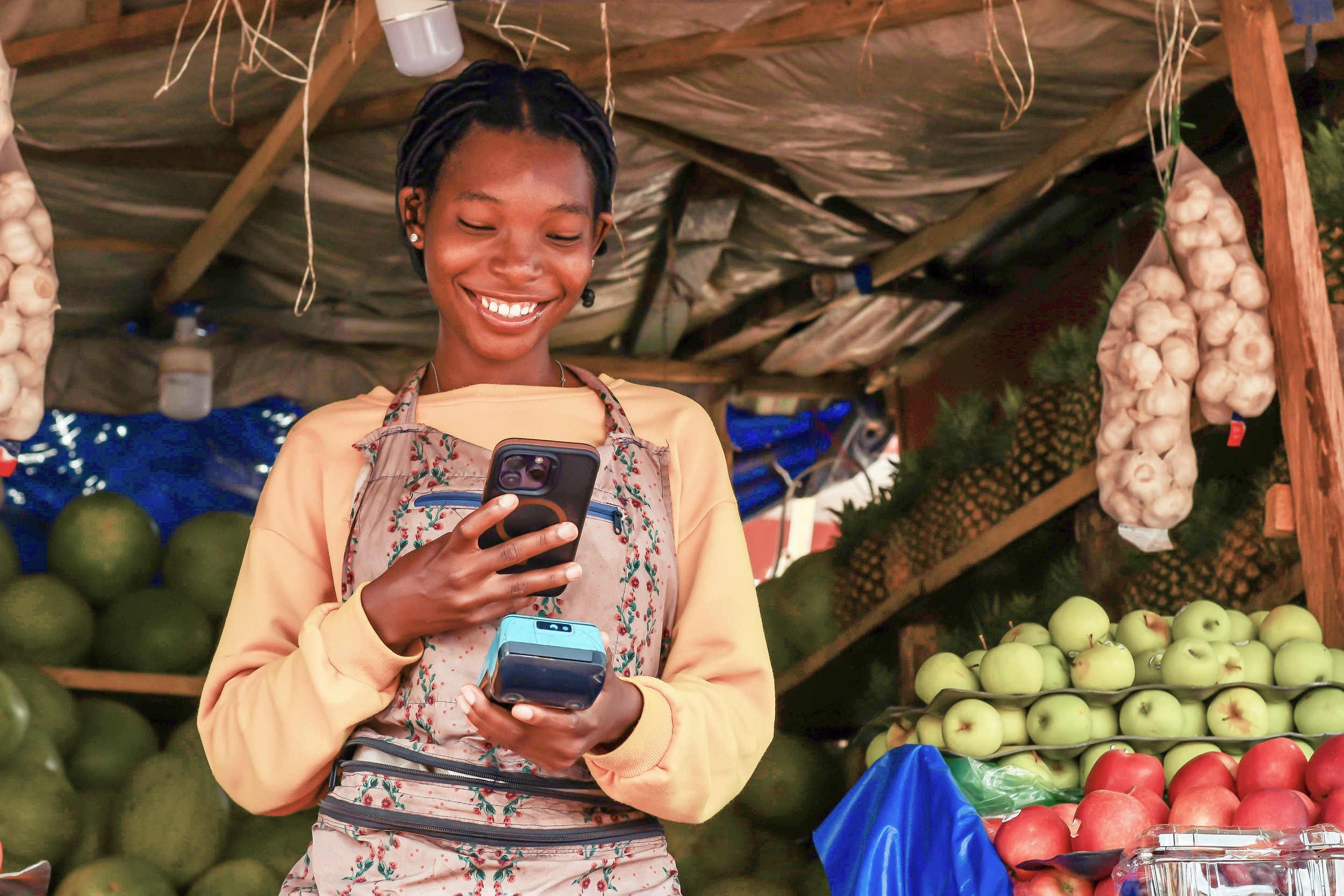
Digital Government-to-Person (G2P) payments can improve women’s access to social protection and financial services, but digital systems can also create barriers to inclusion. The key issue is whether women can navigate the entire payment journey independently. Here we share findings from the Open-Source G2P Programme, which is examining where gender-based exclusion occurs and how open-source software can support more inclusive delivery systems.
G2P payments can strengthen women’s access to social protection and formal financial services when transfers are paid into an account that a woman owns, controls and can use independently. But digitisation can also introduce new points of exclusion. Women may face barriers in obtaining identification, owning or controlling a mobile phone, accessing affordable connectivity, using digital interfaces, travelling to registration or agent locations, authenticating successfully, or opening and operating accounts independently (1) . Social norms can further compound each of these constraints.
The key question is therefore not simply whether a G2P system is digital. It is whether women can navigate the full delivery chain: establish eligibility, register, authenticate, receive information, access and control their payments, exercise meaningful choice and obtain redress when something goes wrong.
The Open-Source G2P Payments research programme, led by Financial Innovation for Impact (Fii) in collaboration with the Cambridge Centre for Alternative Finance (CCAF) and supported by the Gates Foundation, examines G2P as an end-to-end delivery chain rather than focusing only on the final transfer. This article considers where gender-based exclusion can emerge along that chain, and what open-source software (OSS) can—and cannot—contribute to more inclusive systems. Both parts of that question turn out to matter more than the debate usually allows.
G2P can expand access, but digitisation doesn’t remove gender barriers
Despite significant expansion in social protection over the past decade, 3.8 billion people remain without any social protection (2). Around two billion of them are women and girls, who are also disproportionately excluded from unemployment benefits, pensions and healthcare. Women aged 25 to 34 are 25% more likely than men in the same age group to live in extremely poor households, reflecting persistent inequalities in income, employment and unpaid care responsibilities (3).
To improve the delivery of social protection, governments are increasingly digitising public services allowing benefits to be transferred directly to individuals through digital channels (4). While digitising social protection remains an essential goal for governments, access to benefits increasingly depends on multiple digital payment rails. In theory, these innovations can make social protection more accessible to marginalised groups. In practice, however, women often face barriers at every stage of the digitisation journey (5) and such payment systems are not gender neutral.
G2P payments (6) have emerged as one driver of women’s financial inclusion, which can create greater empowerment when payments are deposited into accounts owned by women (7). G2P payments can act as powerful drivers of financial inclusion, digital account ownership and economic empowerment especially for women (8).
Global Findex 2025 shows that 73% of women in low- and middle-income countries had a financial account in 2024, up seven percentage points since 2021, although more than 700 million women remained unbanked (9). Three-quarters of women in these countries who received G2P payments were paid into an account. This progress is significant, but account access alone does not ensure that women can use and control payments independently.
For many years, governments have approached G2P systems as isolated tools for the delivery of social protection, this approach is rapidly changing as digital capabilities expand, enabling governments to deliver financial support more effectively and increasingly position G2P within broader Digital Public Infrastructure (DPI) (10). However, G2P digital payment systems are not inherently inclusive, their impact is dependent on how they are designed, implemented and governed to enhance inclusion.
Understanding exclusion across G2P delivery chain
Exclusion can occur well before money is disbursed. A woman may be eligible for a programme but lack the documentation needed to register. She may be enrolled but unable to complete biometric authentication. A payment may reach an account in her name, but another household member may control the phone, PIN or agent interaction (11). She may also be unable to recover an account, challenge an incorrect decision or obtain assistance when a payment fails (12).
These risks are not experienced uniformly. Women with disabilities, older women, migrant women and women from ethnic or linguistic minority groups may face multiple and overlapping barriers. Accessible interfaces, assistive-technology compatibility, local-language support and assisted service channels therefore cannot be treated as optional additions; they are part of the core design of an inclusive delivery system (13).
User-centred design is most useful when applied across the whole delivery chain. Rather than asking only whether a platform is technically functional, governments should test whether different users can complete each critical step independently, safely and with a realistic level of effort (14). Understanding these intersecting forms of exclusion is essential for digital social protection systems to achieve their intended goals on poverty reduction in households (15).
The promise of open-source software for gender inclusion
In the efforts to design and digitise inclusive G2P systems, an alternative for regulators is to build delivery systems that are capable of integrating with existing payment infrastructure. Governments and development partners are increasingly exploring open-source components and digital public goods (DPGs) as part of wider G2P and DPI architectures (16). The transition from traditional cash transfers to digital platforms matters because these platforms shape who is included and excluded, and how citizens experience public services. It also reflects a broader recognition that digital platforms are not standalone functions but foundational systems underpinning social protection, financial inclusion and public-service delivery (17).
Open-source software can offer governments greater flexibility to adapt and modify digital systems in response to changing needs of marginalised and underserved groups (18). Open-source and proprietary software differ primarily in how their source code can be accessed, used and modified. Proprietary software generally restricts access to its source code, while open-source software makes the code available under licences that permit inspection, modification and redistribution, subject to the applicable licence terms (19). The significance of open-source goes beyond technology; at its core are openness, collaboration, and flexibility.
Open-source is an enabler, not a guarantee
OSS can give governments greater control over systems and how they evolve; however systems being built on open-source software does not automatically translate into inclusive outcomes (20). The same biases and exclusions that exist in proprietary systems can also find their way into open systems. The democratic and participatory nature of open source does not make it free of social, cultural and technical biases. Open code can create opportunities to adapt systems to women’s needs, but inclusive outcomes still depend on design choices, governance and implementation. Proprietary systems also have limitations, including reduced transparency, greater vendor dependence and less flexibility to adapt to changing inclusion needs. OSS, meanwhile, can introduce operational, consumer-protection, policy and governance risks that affect interoperability and long-term sustainability (21 ,22).
Putting people at the centre of digital transformation
As governments expand digital social protection and broader digital public infrastructure, success should not be measured only by the number of people registered, the speed of transfers or reductions in administrative cost. These indicators matter, but they do not show whether intended beneficiaries can actually access, control and use their payments.
A more complete assessment would examine failed registrations and authentications, inactive or inaccessible accounts, payment delays, distance to service points, beneficiary control over credentials, availability of alternative channels and the speed and quality of complaint resolution. Where appropriate and safe, these outcomes should be disaggregated by gender, disability, age, location and other relevant characteristics.
This shifts the focus from formal coverage to effective access. A system is not inclusive merely because a woman is enrolled or an account has been opened in her name (23). It is inclusive when she can use the system with agency, privacy, dignity and meaningful choice (24).
Considerations for regulators and policymakers
Digital exclusion is not only a technological problem, it often reflects and reinforces existing social and gender inequalities. The value of OSS can extend beyond cost savings or technical flexibility, it creates opportunities for collaboration among governments, NGOs, women's organisations, private sector and civil society. Open-source is not a silver bullet, but it can support more inclusive systems when combined with clear institutional responsibilities, meaningful participation and effective oversight. For policymakers, implementing agencies and regulators, priorities include:
Define inclusion requirements before selecting technology. Procurement and system specifications should set clear expectations for accessibility, language support, assisted service, authentication alternatives, data protection, beneficiary choice and grievance redress.
Test every stage of the delivery chain. Testing should cover registration, authentication, communication, payment access, account recovery and complaints, not only the final interface.
Provide alternatives. Beneficiaries should not lose access solely because they lack a smartphone, cannot use one authentication method or cannot reach a particular agent or provider.
Monitor outcomes, not only enrolment. Gender-disaggregated data and qualitative feedback should be used to identify where people drop out, depend on intermediaries or experience repeated failures, while protecting privacy and avoiding new harms.
The question is not whether the software is open. It is whether the complete G2P delivery system enables women and other marginalised users to access support reliably, control how they receive it, exercise meaningful choice and obtain redress when something goes wrong.
Authors
Jackline Tino, Research Analyst at the Cambridge Centre for Alternative Finance
Sharoon Rasheed, Digital Payments Specialist at Financial Innovation for Impact
About this article
This article is part of the Open-Source G2P research programme led by Financial Innovation for Impact (Fii), in collaboration with the Cambridge Centre for Alternative Finance (CCAF) at Cambridge Judge Business School, University of Cambridge, with support from the Gates Foundation. The programme explores more on gender considerations and how open-source solutions can strengthen digital and financial inclusion within the digital G2P landscape in the upcoming benchmarking report on Open-Source G2P.
References
(1) https://www.gsma.com/gender-gap-2025/
(2) https://www.ilo.org/sites/default/files/2024-09/WSPR_2024_EN_WEB_1.pdf
(3) Cookson, J. A., Lu, R., Mullins, W., & Niessner, M. (2024). The social signal. Journal of Financial Economics, 158, Article 103745. https://doi.org/10.1016/j.jfineco.2024.103745. https://www.unwomen.org/en/news-stories/press-release/2024/10/two-billion-women-and-girls-worldwide-lack-access-to-any-form-of-social-protection-un-women-report-shows
(5) UN Women (2024). Risks and Benefits of Digital Tools from a Gender Perspective. https://www.unwomen.org/sites/default/files/202402/risks_and_benefits_of_digital_tools_from_a_gender_perspective_en.pdf
(6) Payment transfers made by governments directly to individuals to deliver public benefits and services such as social assistance, pensions, emergency relief payments etc.
(7) https://blogs.worldbank.org/en/voices/empowering-women-send-social-assistance-payments-directly-her
(9) World Bank (2025), The Global Findex Database 2025: Connectivity and Financial Inclusion in the Digital Economy. https://www.worldbank.org/en/publication/globalfindex; and World Bank (2026), The power of payments: What is driving women’s financial inclusion? https://blogs.worldbank.org/en/developmenttalk/the-power-of-payments--what-s-driving-women-s-financial-inclusio
(10) Digital Public Infrastructure (DPI) refers to foundational digital systems designed for public benefit that can be reused across sectors. In the G2P context, DPI comprises three essential and interconnected layers: 1) digital identity, 2) interoperable payment systems and 3) secure data exchange.
(11) Johnson, S. (2004). Gender norms in financial markets: Evidence from Kenya. World Development, 32(8), 1355–1374. https://doi.org/10.1016/j.worlddev.2004.03.003
(12) Better Than Cash Alliance. (2021). Responsible digital payments guidelines. United Nations Capital Development Fund. https://www.betterthancash.org
(14) van Velsen, L., van der Geest, T., ter Hedde, M. and Derks, W. (2009)‘Requirements engineering for e-Government services: A citizen-centric approach and case study’, Government Information Quarterly, 26(3), pp. 477–486.
(15) https://social.desa.un.org/sites/default/files/publications/2023-03/World-Social-Report-2018.pdf
(16) World Bank (2022) Next Generation G2P Payments: Building Blocks of a Modern G2P Architecture. Washington, DC: World Bank. Available at:
World Bank G2P Architecture Report
(17) The World Bank. G2Px: Digitizing Government-to-Person Payments. https://www.worldbank.org/en/programs/g2px
(18) Digital Public Goods Alliance (2020) Why Open Source? Digital Public Goods Alliance https://www.digitalpublicgoods.net/blog/why-open-source
(19) Access Partnership (2018) Digital Innovation in Public Financial Management (PFM): Opportunities and Implications for Low-Income Countries. Available at: https://accesspartnership.com/wp-content/uploads/2023/01/pfm-technology-paper-long-version.pdf
(20) CGAP (2016) 5 consumer risks in digital social payments to the poor. Available at: https://www.cgap.org/blog/5-consumer-risks-in-digital-social-payments-to-poor
(21) World Bank (2022) Next Generation G2p Payments. Building Blocks of a Modern G2P Architecture. Available at: https://documents1.worldbank.org/curated/en/099600110202238143/pdf/P173166068e4220430a0ff03279b01c83db.pdf
(22) CGAP. (nd) Familias en Acción: A financial inclusion strategy. Available at: https://www.cgap.org/blog/familias-en-accion-financial-inclusion-strategy